

Faculty Research Data Management Policy
On this page, you can find the current and past versions of the Faculty of Geosciences Research Data Management Policy.
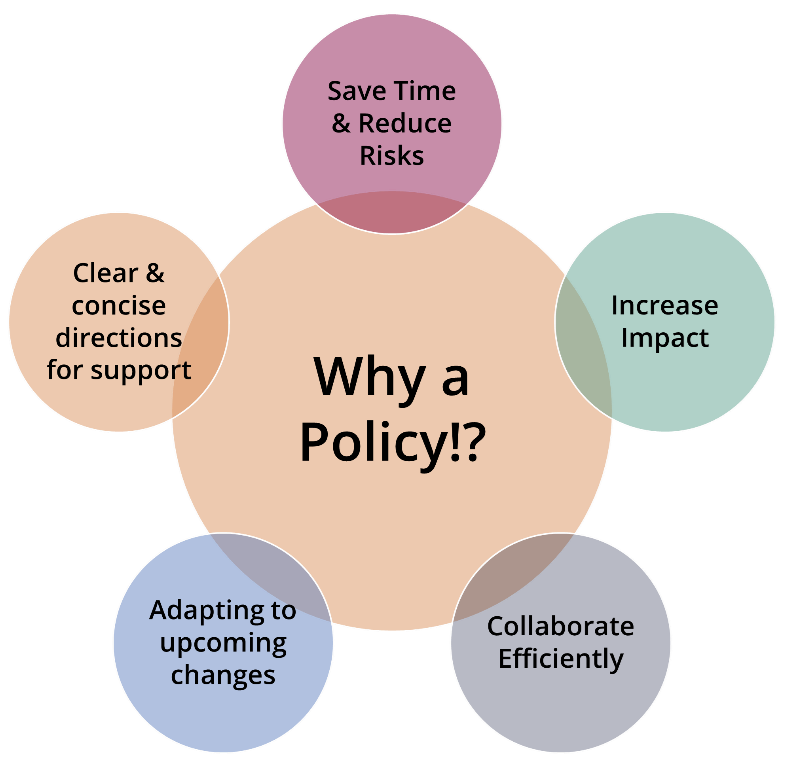
Download the PolicyWhy do we need a policy?
The Research Data Management Policy of our faculty outlines the shared responsibilities for managing research data through the life cycle of a research project, from planning and collection to sharing and preservation. With this policy, we aim to support our researchers in meeting ethical, legal, and funding requirements and foster a cu
lture of collaboration, transparency, and open science within our faculty community.
Who is it for?
This policy is for Researchers and all individuals involved in the research process, including but not limited to educators, students, lab managers, and technicians associated with the Faculty of Geosciences.
What does the policy provide?
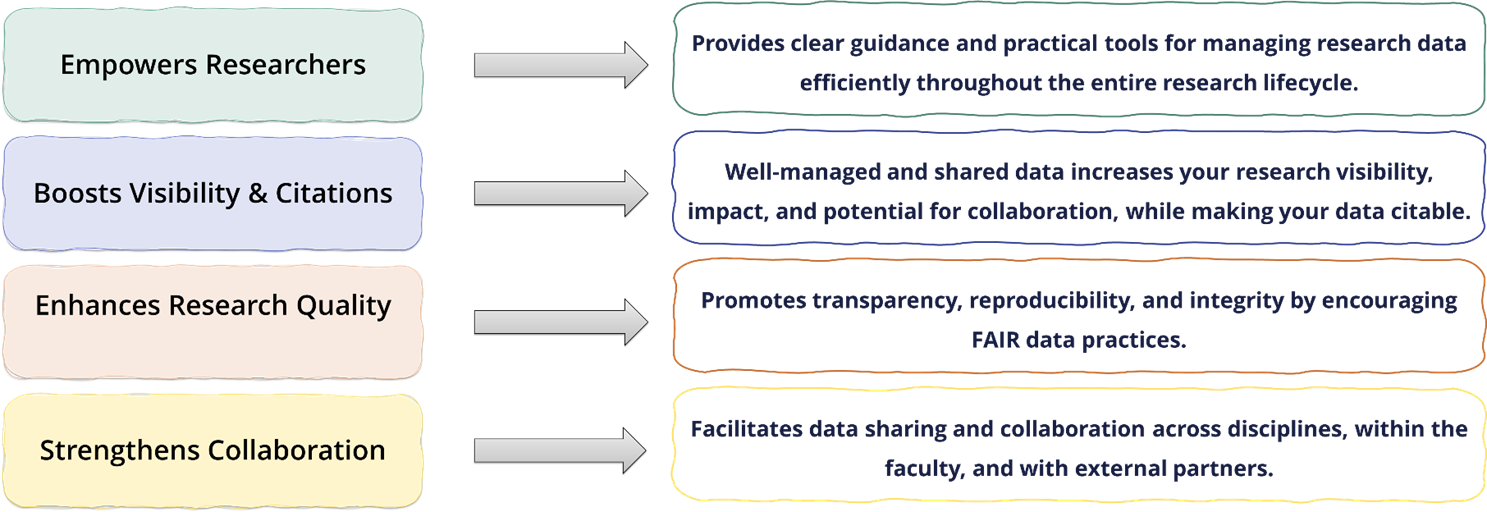
This policy delivers the necessary framework to assist and empower faculty researchers in achieving compliance with Open Science and RDM principles. By fostering robust data handling practices from project inception to dissemination, the policy seeks to maximize the visibility, reproducibility, and impact of research outputs. Moreover, it outlines actionable steps to embed these principles into everyday practices, leveraging the resources and facilities available at Utrecht University and the Faculty of Geosciences.
How can you find the policy?
The primary policy was accepted in February 2025 by the faculty board and was finalized shortly after.
The current version of the policy is Version 1.0
Download the PolicyPolicy Implementation
Rolling the policy out to faculty will not happen overnight, therefore we have created an implementation plan. The policy implementation is structured around four complementary pillars. Together, these pillars ensure that the policy is not only aspirational, but practically embedded in the research workflow, supported by appropriate infrastructure, and sustained through incentives and community engagement.
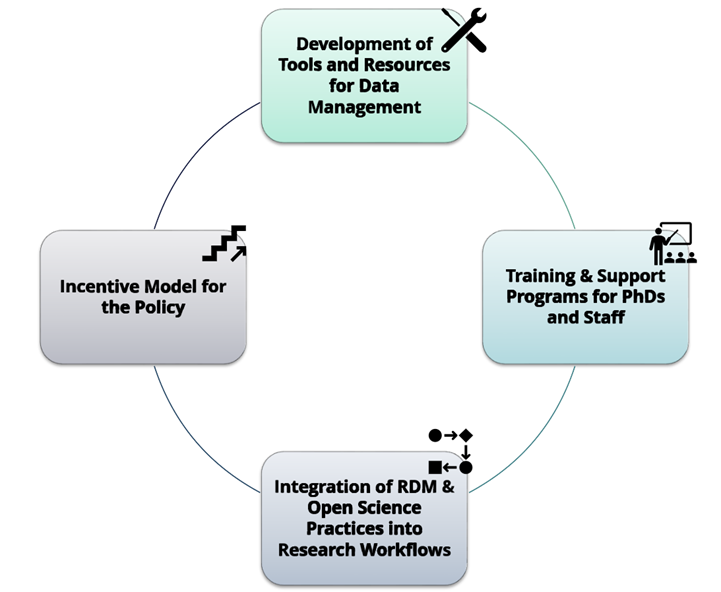
Development of Tools and Resources for Data Management
The policy is implemented through the development and provision of practical tools and resources that support good data management and Open Science practices. This involves tools that have already been developed by the Geo Data Team and are being further refined, or that are being set up from scratch. Examples include:
- Geo Data Team website
- Welcoming package for starting researchers
- Educational posters
- Survey Dashboard (only internal access)
These tools are designed to reduce administrative burden and enable researchers to apply RDM and Open Science principles efficiently in their daily work.
Training & Support Programs for PhDs and Staff
Training and support are central to successful policy implementation. To do this, the Geo Data Team together with other partners across the faculty provides:
- Introductory and advances workshops on RDM and Open Science to research groups and faculty settings
- Targeted introductory training for PhDs, postdocs, and research staff
- Project-specific support tailored to data type, methodology, and their needs
The emphasis is on capacity building, ensuring that researchers develop sustainable skills rather than one-off compliance knowledge.
Integration of RDM & Open Science Practices into Research Workflows
Rather than treating RDM and Open Science as separate or additional requirements, the policy is implemented by embedding these practices into existing research workflows. This covers writing project proposals until the completion phase of the project. As an example, The Geo Data Team is directly participating in current research projects as consultants and contributors:
This integration ensures that RDM and Open Science practices are applied at the right moment, in proportion to project needs, and aligned with disciplinary norms.
Incentive Model for the Policy
To encourage adoption and reward good practices, the policy is supported by an incentive-based approach. As the first initiative, we started by awarding the Geo Data Prize to most FAIR, open, and impactful research outputs published in the faculty. Besides that, we also aim to include the Open Science and RDM activities in the faculty-level evaluation and assessment of the research staff. This will result in shaping a positive culture around RDM and Open Science, where good practices are valued and rewarded, not merely required.
We have also hosted an Open Science Day, where expressions of open access publications, open data, and open-source code created by our faculty members are highlighted in posters. The digital versions can be found here.